EURORACK MECHANICAL JSC

Push Back Racking

Push Back Racking

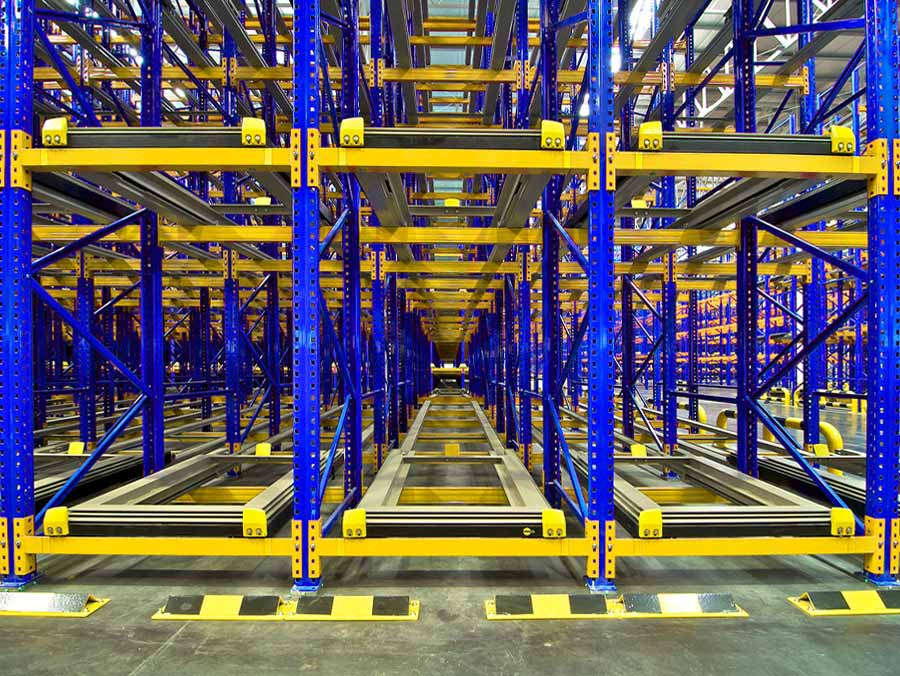
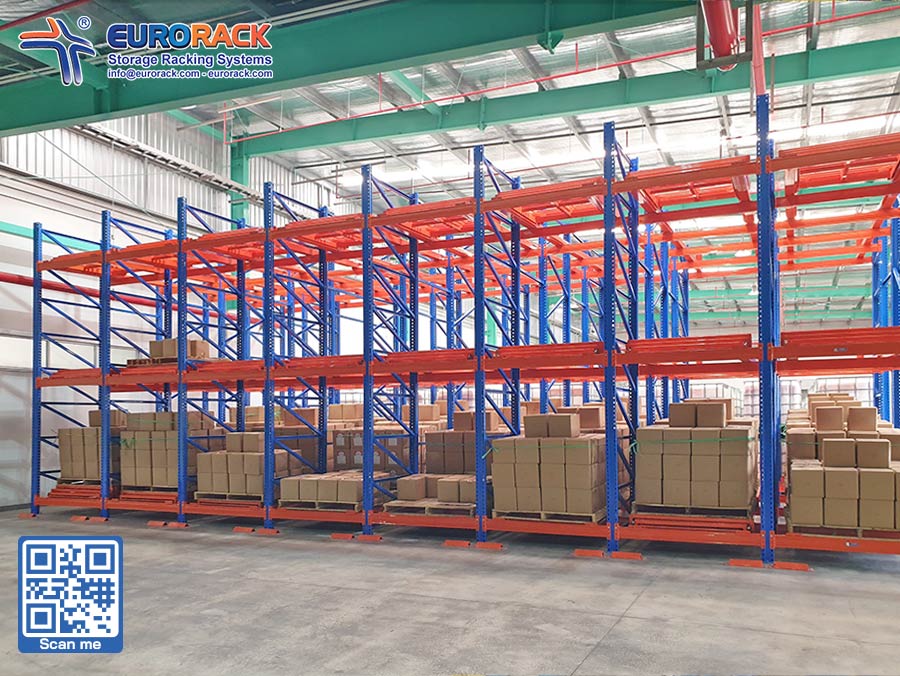
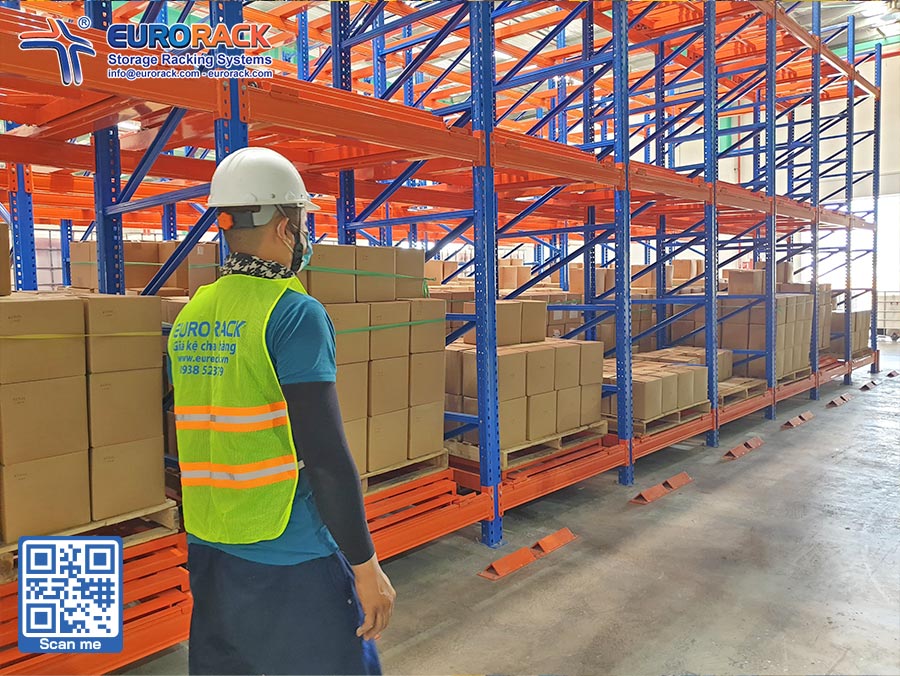
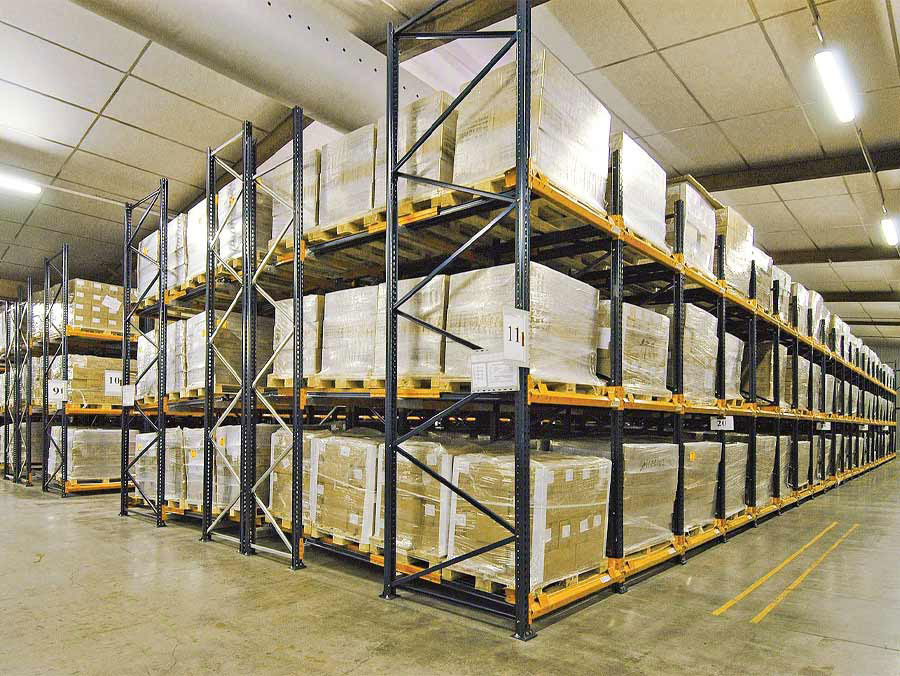
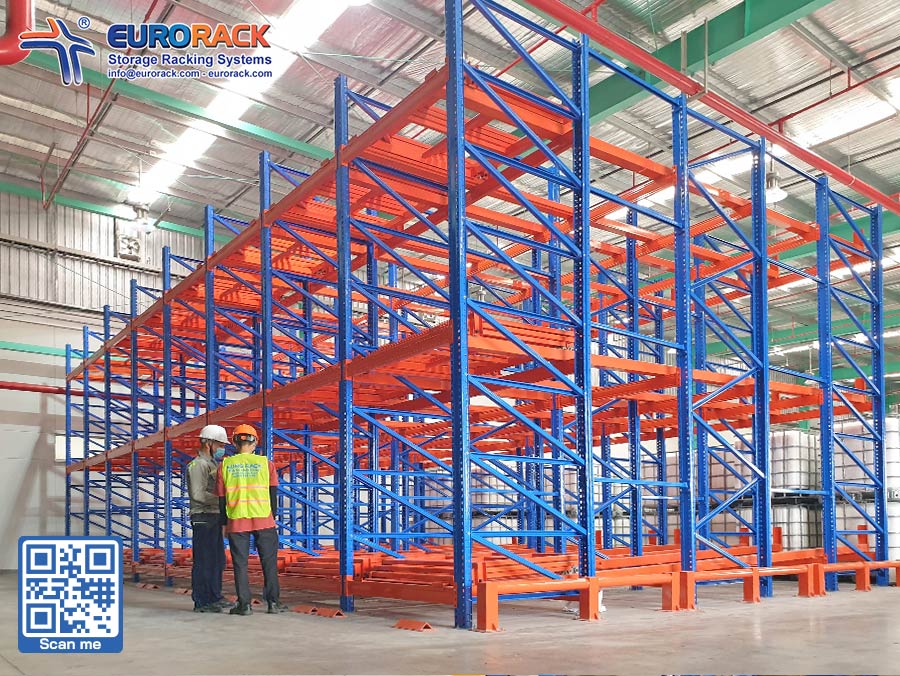
Push Back Racking is a pallet storage system that operates on an automatic load accumulation principle, helping to increase storage density without the need to expand warehouse space. Each storage lane can hold between two and six consecutive pallets, operating under the LIFO – Last In First Out mechanism, meaning the last pallet loaded is the first to be retrieved.

Push Back Racking

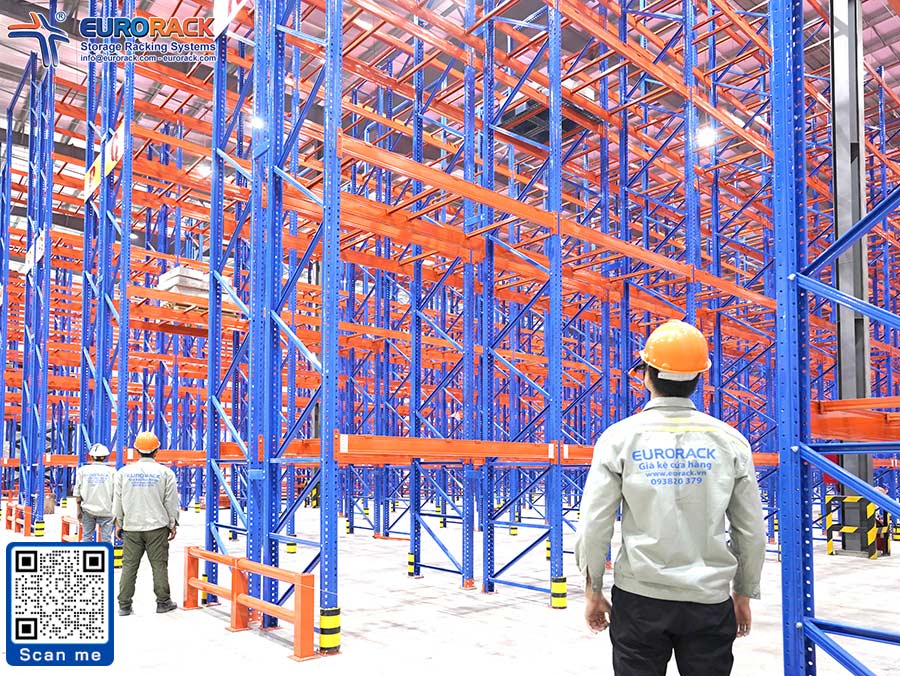
In the context of warehouses that increasingly demand high efficiency and maximum space utilization, Eurorack Push Back Racking has become a preferred storage solution for many businesses. Operating on an intelligent load accumulation principle, it allows multiple pallets to be stored consecutively within the same lane while ensuring fast and safe handling. Built to European quality standards, the system offers a robust and flexible design that can be tailored to a wide range of warehouse layouts and storage needs. Its modular structure makes installation, adjustment, and expansion simple, providing long-term value and adaptability as operations grow. By improving space utilization and streamlining material flow, Eurorack Push Back Racking helps businesses achieve higher efficiency, lower operational costs, and smoother logistics performance.

Push Back Racking

Introduction to Push Back Racks

Push Back Racking is a pallet storage system that operates on an automatic load accumulation principle, helping to increase storage density without the need to expand warehouse space. Each storage lane can hold between two and six consecutive pallets, operating under the LIFO – Last In First Out mechanism, meaning the last pallet loaded is the first to be retrieved. This system uses inclined rails combined with trolleys or rollers, allowing pallets to move automatically by gravity. When a pallet is removed, the remaining pallets slide forward, ready for the next retrieval. With its simple operating mechanism and high handling speed, Push Back Racking has become one of the most efficient storage solutions for warehouses with a medium to high turnover rate.

Overview of the Push Back Racking System

Technical specifications of Push Back Racks

  • Load capacity:  ≥ 500kg/pallet.
  • Height: Optimized up to 7m.
  • Upright frame: Omega perforated column.
  • Decking: Uses rail beams and pallet guide frames.
  • Material: High-quality electrostatic powder-coated steel, European standard.
  • Handling method: Suitable for all types of forklifts.
  • Loading and unloading system: LIFO (Last In – First Out).
  • Trolley incline: From 2–3 degrees.

Technical specifications of Push Back Racking

Push Back Racking is a pallet push-back system capable of carrying loads of up to 1,500kg per pallet.

Push back pallet rack components

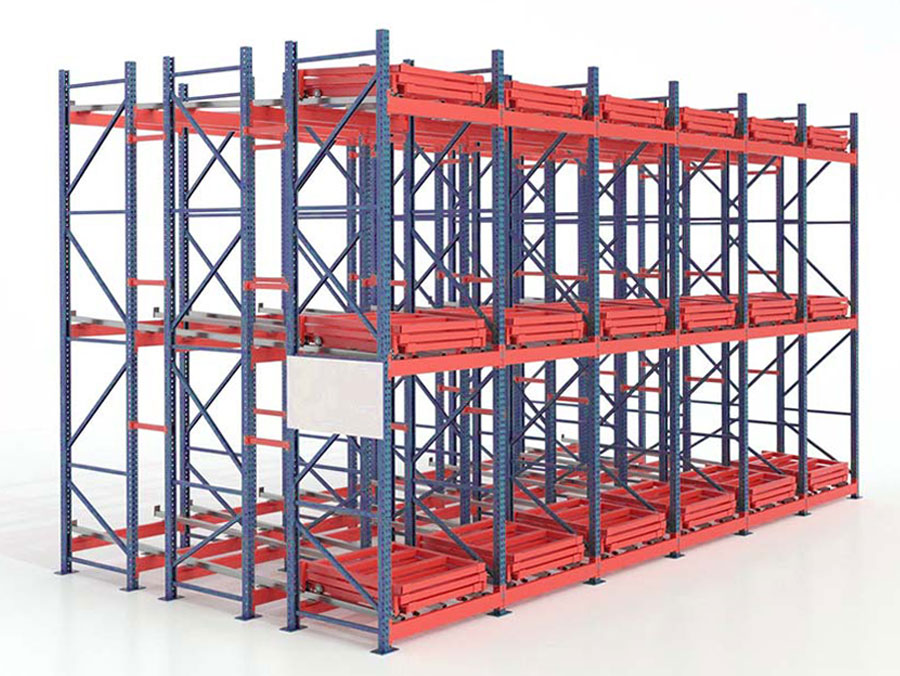
A standard Eurorack Push Back Racking system is designed to be sturdy and synchronized, consisting of the following main components:

  • Frame: a high-strength steel structure that ensures stability when loading multiple levels.

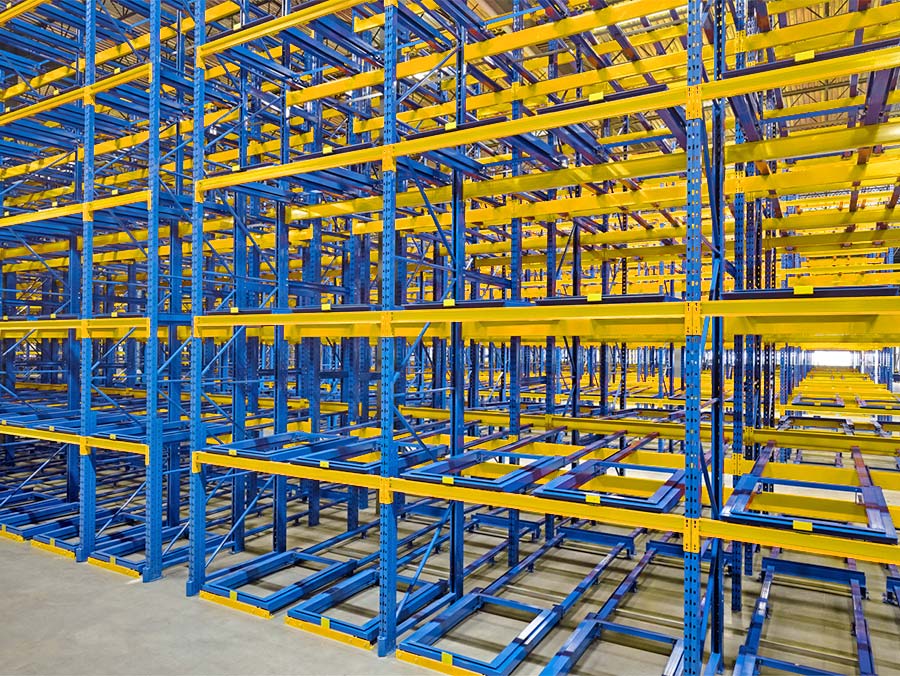
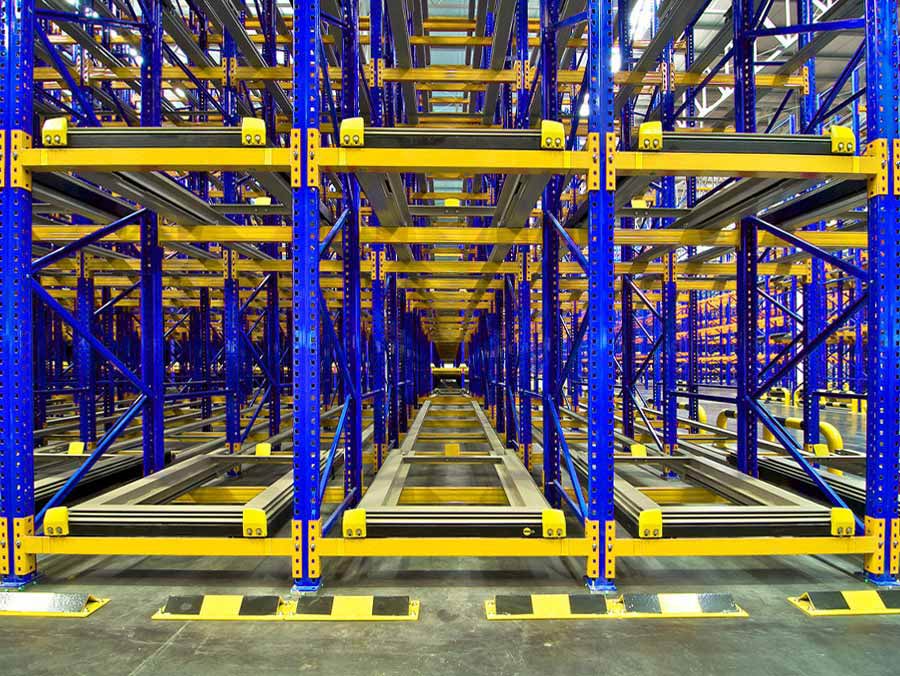
  • Beams and inclined rails: installed with a slight slope to allow pallets to glide smoothly forward.

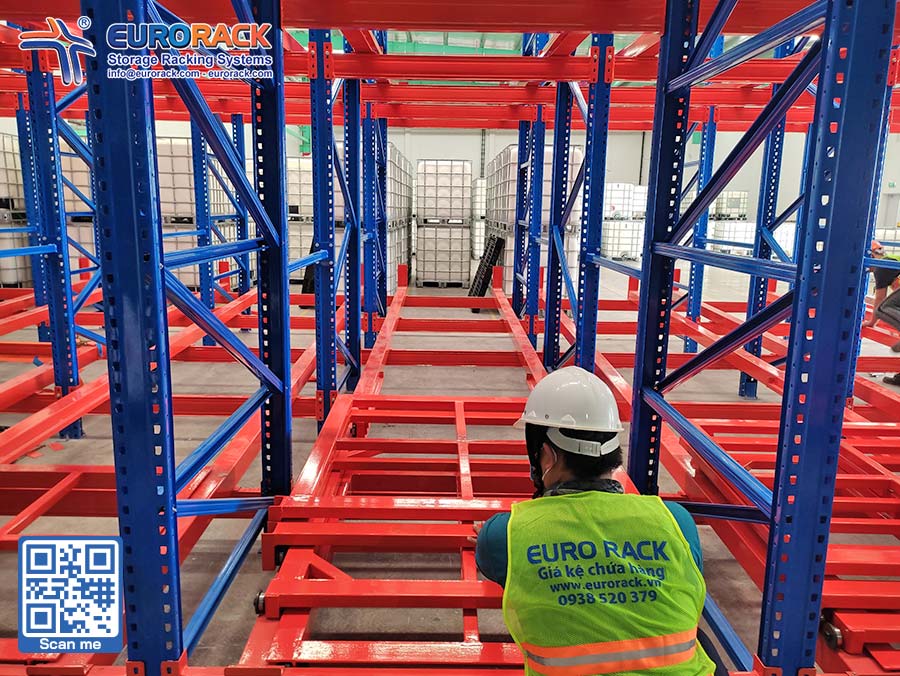
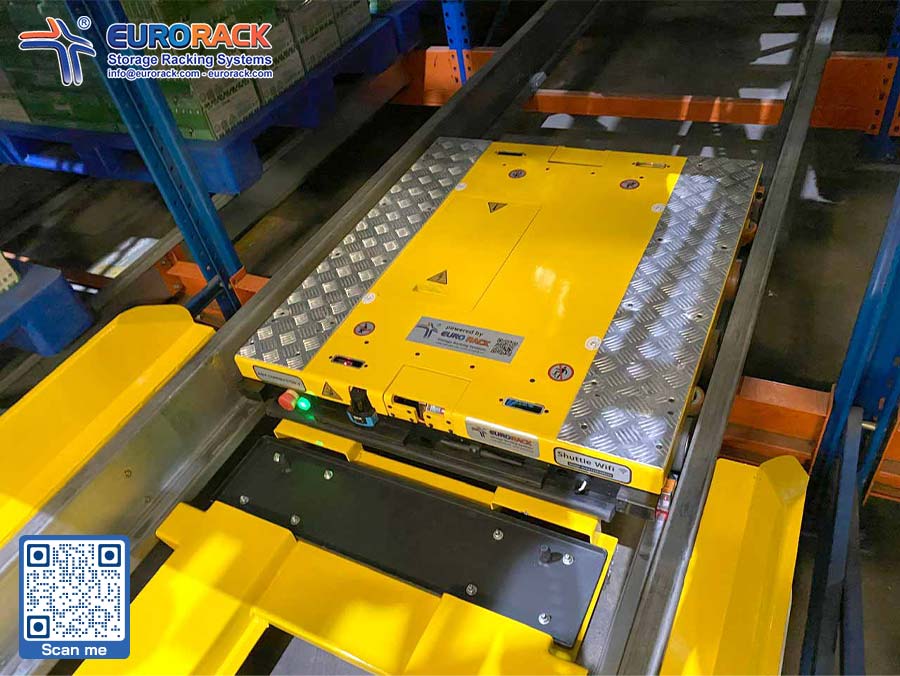
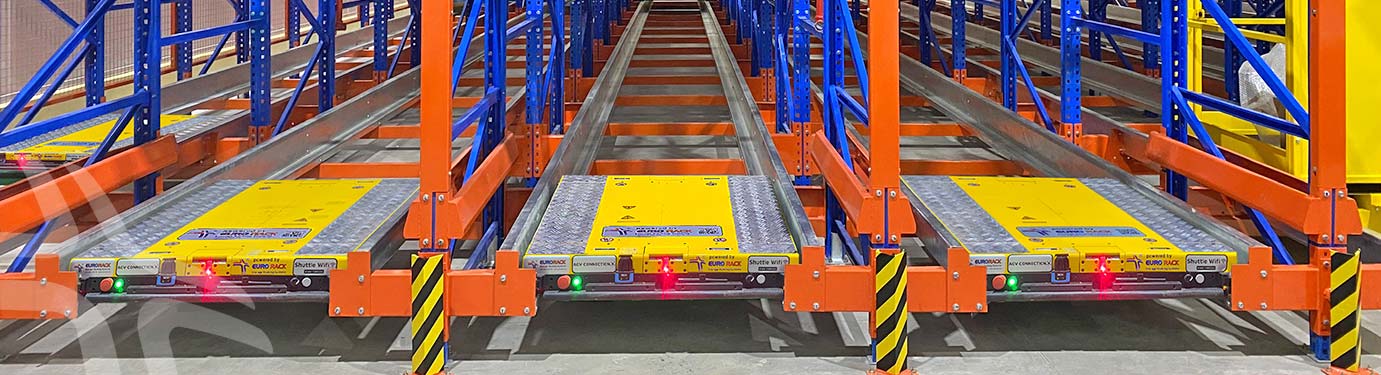
  • Trolleys: robustly designed, capable of carrying loads up to 1,500 kg, gliding smoothly on the rails thanks to the bearing system.

  • Locking mechanism and safety latch: used to secure pallets when they are not correctly positioned.

  • Pallet centering guide: helps align and position pallets accurately during loading operations.

Each component is precisely manufactured to ensure durability, safety, and stable performance over time.

Note: On a single pallet guide rail, Push Back Racking can have 2, 3, 4, or 5 trolleys (depending on the number of pallets or specific storage requirements). For optimal use and cost efficiency, please contact 0938 520 379 for detailed consultation.

Structural components of Push Back Pallet Racking

How the system works

During operation, the forklift places the first pallet on the top trolley. Then, the second pallet is gently pushed, causing the first pallet to move deeper into the lane. This process continues until the entire storage channel is filled. When it is time to retrieve goods, the forklift removes the outermost pallet. The pallets behind will automatically slide forward by gravity. As a result, loading and unloading take place continuously, quickly, and safely without the forklift having to move deep inside the rack. This mechanism not only helps save handling time but also reduces the risk of structural collisions, extending the overall lifespan of the system.

System operation process

Optimize loading and unloading operations with Eurorack Push Back Racking

Outstanding advantages of Push Back Racking

  • Optimized space and increased storage density: Push Back Racking allows multiple pallets to be stored consecutively within the same lane, saving aisle space and increasing storage capacity by up to 40% compared to standard Selective Racking. This system is particularly effective for warehouses that store a wide range of products, each with a moderate quantity.
  • Faster material handling: The forklift only needs to operate from one side of the rack without having to move deep into the aisles to place pallets. This reduces handling time, improves loading and unloading efficiency, and minimizes congestion in the operating area. The automatic sliding mechanism of the pallets allows the operator to control movement easily without manually adjusting each load.
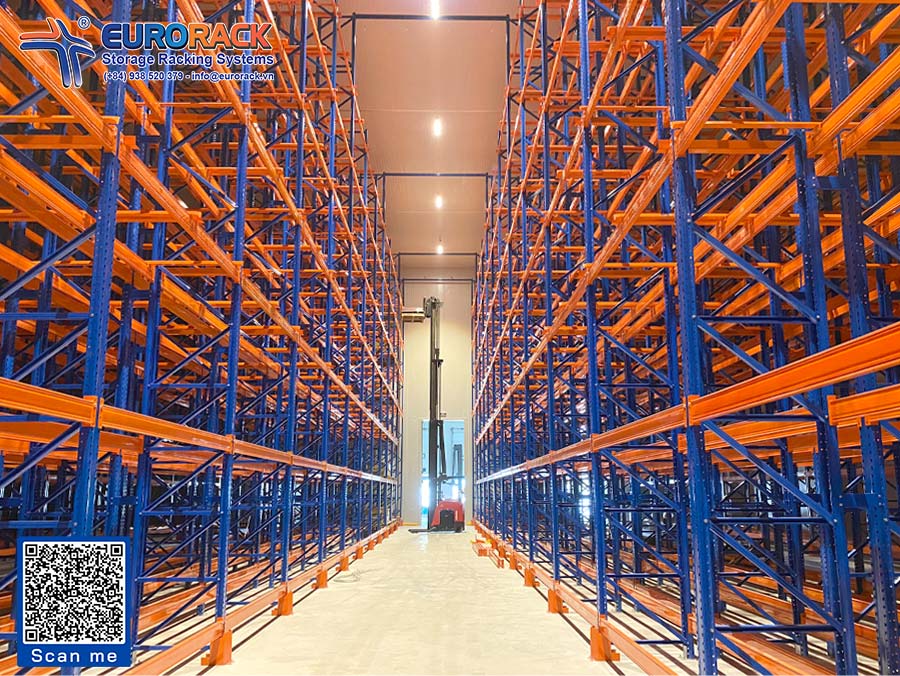
  • Safety and durability under all conditions: Since the forklift does not need to enter the rack lanes, the risk of impact and structural damage is significantly reduced. Every detail of the Eurorack system is manufactured with high precision. Locking devices and pallet guides ensure correct positioning, minimizing the risk of misalignment during operation. Additionally, all materials are finished with electrostatic powder coating and can operate in temperature ranges from -30°C to +40°C, making them ideal for cold storage warehouses and food processing facilities.
  • Flexibility for various types of goods: Each lane of the Push Back Rack can hold a specific SKU, offering flexibility in warehouse management. Eurorack designs modular components that can be easily expanded, adjusted in depth, or combined with other racking systems to meet the practical needs of different warehouse layouts.

Key advantages of Eurorack Push Back Racking

Push Back System Variations

  • Trolley type: This is the most common configuration. Pallets move on a system of trolleys equipped with ball-bearing wheels. Each rack level can store from two to four pallets in depth. This type features a durable structure, stable operation, and is suitable for most standard warehouse environments.
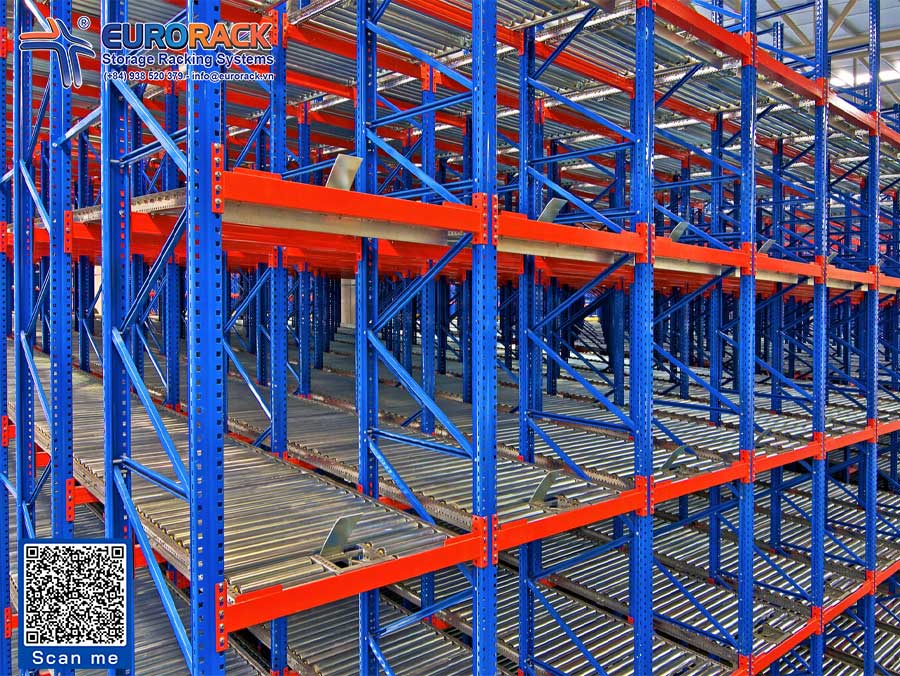
  • Roller type: The system uses roller tracks instead of trolleys. Pallets slide more smoothly and can store up to six pallets per lane. This option is ideal for warehouses with a large number of pallets and a limited variety of SKUs.
  • Integrated picking level: Eurorack also develops a combined configuration where the lower level is dedicated to piece picking, while the upper levels are used for full pallet storage. This model is particularly suitable for distribution centers or warehouses with high order throughput.

Variants of the Push Back Racking System

Compare Push Back Racking with other storage systems

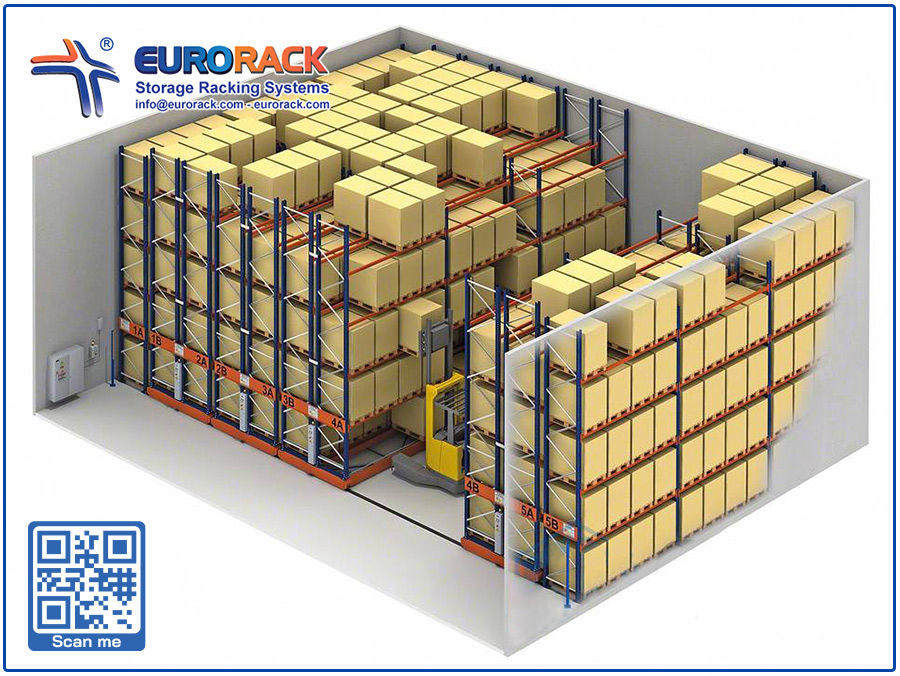
Push Back Racking and Drive-In Racking

Both Push Back and Drive-In Racking systems are designed to increase warehouse storage density, but each has its own method of operation and distinct advantages.

  • Push Back Racking allows forklifts to operate from a single working face, enabling faster loading and unloading while reducing the risk of structural collisions. Each lane can accommodate multiple SKUs, making it suitable for warehouses with diverse product types and frequent stock rotation. However, as it operates on the LIFO (Last In – First Out) principle, this system is not ideal for goods that require FIFO management.
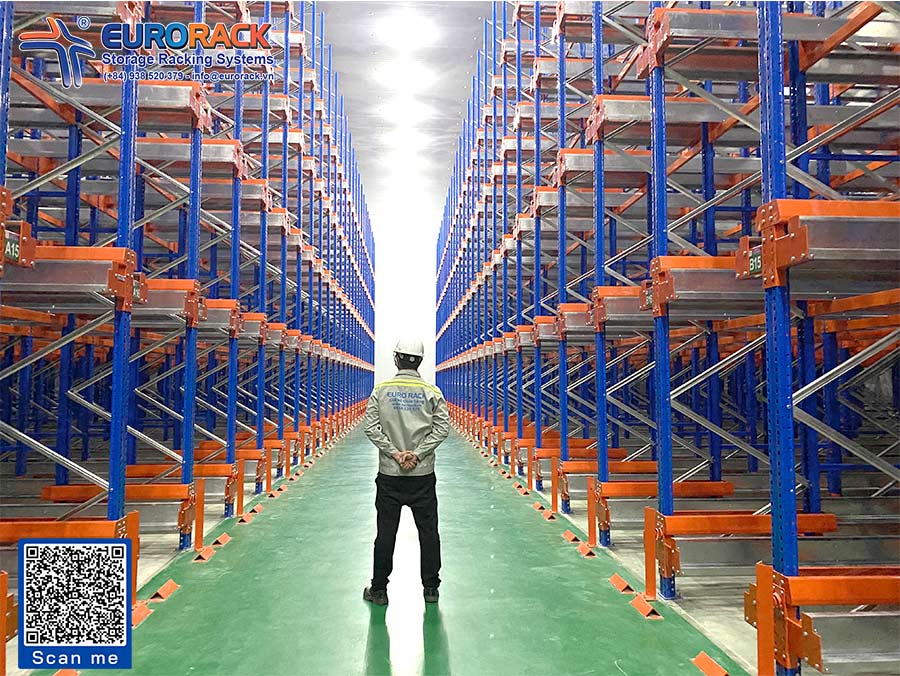
  • In contrast, Drive-In Racking has a lower initial investment cost and is suitable for uniform goods stored in large quantities that require deep storage. Forklifts can enter the rack structure to place pallets, maximizing space utilization. The drawback is that operation requires more technical skill, with a higher risk of collision and difficulty in managing multiple SKUs simultaneously.

See details about Drive-In Racking herehttps://eurorack.com/product/drive-in-racking.html 

Push Back Racking and Pallet Flow Racking

Both Pallet Flow and Push Back systems use gravity-fed movement, but they differ in direction of flow and inventory management principles.

  • Pallet Flow operates on the FIFO (First In – First Out) principle, where pallets are loaded from one side and retrieved from the opposite side. This system is particularly suitable for products with expiration dates that require strict rotation, such as food, beverages, or pharmaceuticals. Its drawback lies in the higher investment and maintenance costs due to a more complex structure and the need for separate loading and unloading aisles.
  • Meanwhile, Push Back Racking works on the LIFO (Last In – First Out) principle, using a load accumulation mechanism from the same side. Its compact design is easy to install and offers a more cost-effective solution, ideal for warehouses with multiple SKUs but few pallets per SKU. However, this system is not suitable for goods requiring strict FIFO inventory control.

See details about Pallet Flow Racking herehttps://eurorack.com/product/pallet-flow-racking.html

Comparison between Push Back Racking and other storage systems

Practical application of Push Back Racking

Push Back Racking is widely applied across various industries:

  • Food and beverage industry: enables quick loading and unloading, minimizes cold storage door openings, and maintains consistent product quality.

  • Cold storage warehouses: save energy by reducing door open time and providing better temperature control.

  • Fast-Moving Consumer Goods (FMCG): meets continuous storage and product rotation demands efficiently.

  • Distribution and logistics warehouses: optimize material flow, reduce operating costs, and enhance order processing efficiency.

Practical applications of Eurorack Push Back Racking

Why should you choose Eurorack Push Back Rack?

European standard quality

Eurorack Push Back Racking is manufactured under strict quality control processes, complying with international safety standards to ensure durability, stability, and high load capacity.

Customized design for each warehouse

Eurorack offers flexible solutions tailored to the specific dimensions, height, and operational processes of each business. Every project is optimized to achieve the highest possible space efficiency.

Comprehensive consulting and installation services

From the initial survey, design, and production stages to final installation, Eurorack works closely with customers to ensure that each system operates efficiently and safely.

Integration with intelligent warehouse management software

Eurorack offers the option to integrate a Warehouse Management System (WMS) that helps track pallet locations, monitor inventory levels, and optimize material flow throughout the entire warehouse system.

Eurorack Push Back Racking is an intelligent storage solution that increases capacity, reduces operating costs, and ensures maximum safety for warehouse operations. With its durable design, flexible operation, and high level of customization, it is the ideal choice for businesses looking to optimize space and enhance logistics efficiency.

Contact Eurorack today for detailed consultation and to receive a customized Push Back Racking system design tailored to your warehouse needs.

EURORACK MECHANICAL JSC
Request a quote
Please leave your information. We will contact and quote you as soon as possible.
Country Code
skype
viber
whatsapp
zalo1
telegram